Plasma fibroblast downtime is the part of this treatment people ask about most, and the part a lot of clinics gloss over. We would rather be upfront. This is a treatment that creates a controlled wound in order to trigger a healing response, and healing is visible. You will look like you have had something done, for about a week to ten days.
That is not a warning. It is the trade. The visible healing is exactly why the results last two to four years rather than a few months. But it does mean this is a treatment you book around your life, not one you squeeze in on a Thursday before a wedding on Saturday.
Here is what actually happens, day by day.
What plasma fibroblast downtime actually involves
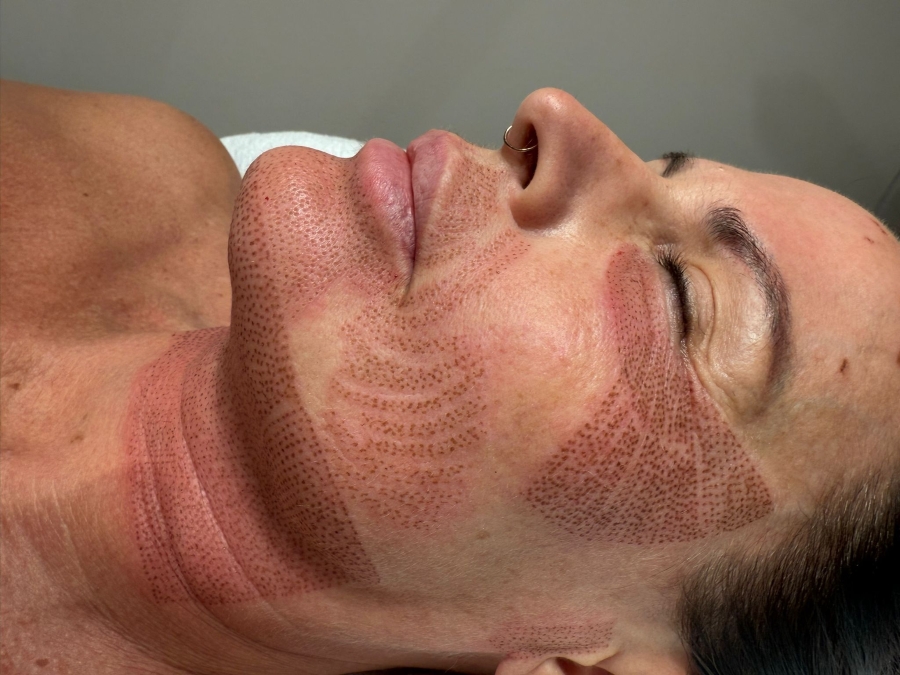
Plasma Fibroblast works by delivering targeted plasma energy to the skin surface in a precise pattern. Each point of contact creates a tiny controlled reaction, which shows up as a small dark dot, often called a carbon dot or carbon crust. Those dots are the visible evidence that the treatment has done its job.
Underneath them, the skin begins a natural wound-healing cascade. Fibroblast activity increases, and the skin starts laying down new collagen and elastin. This regeneration process runs on its own timeline, which is why the best results arrive weeks after the surface has healed, not days.
So there are really two clocks running. Social downtime, which is roughly seven to ten days. And results downtime, which is six to twelve weeks. Most people only think about the first one.
The plasma fibroblast downtime timeline, day by day
Treatment day
You will apply topical numbing at home before you come in. We send an SMS reminder about an hour before your appointment, because the numbing needs roughly 40 minutes to take proper effect. We may top it up during treatment where appropriate.
Straight afterwards the carbon dots are visible and the area feels warm and tight, similar to mild sunburn. Some clients drive themselves home. Others prefer to be picked up, particularly after eye work.
Days 1 to 3: the swelling phase
This is the most visible stage, and it catches people out. Swelling usually peaks somewhere between the morning after and day three. Around the eyes it can be significant. Waking up on day two with noticeably puffy lids is normal, not a complication.
Sleeping slightly elevated helps. So does keeping the area clean, dry and left alone. This is not the window for working out, saunas, or anything that raises heat in the face.
Days 3 to 7: the dots lift
Swelling settles and the carbon dots begin to flake away on their own. Underneath, the new skin is pink and fresh-looking. Some areas will shed before others, so there is usually a patchy few days where half the dots have gone and half have not.
Do not help them along. Picking or scrubbing the dots off before the skin underneath is ready is the single most common cause of prolonged redness, and in some cases marking. Let them lift in their own time.
Days 7 to 10: back to normal, mostly
By now most or all dots have gone. The new skin is still pink and can look slightly flushed, which most people can cover with mineral makeup once we have cleared you to use it. This is the point where clients feel comfortable back at work and out socially.
Seven to ten days is the minimum social downtime we quote. Some people are comfortable at day five. Some want ten. Plan for ten and be pleasantly surprised.
Weeks 2 to 6: the quiet stretch
Surface healing is done and not much appears to be happening. This is the stage where people occasionally worry that it has not worked. It is working. Collagen remodelling is underway and it is invisible from the outside.
Weeks 6 to 12: the actual result
This is when the tightening and lifting become properly visible as the new collagen matures. It is also when we like to take your after photos, because a photo at week two undersells what the treatment has done. Results vary depending on your skin, the area treated, your healing response and your aftercare.
Downtime varies by treatment area
Not all areas behave the same way, and this matters when you are booking.
Upper eyelids and hooded eyes: The most swelling of any area, because the skin is thin and the tissue holds fluid readily. Expect days 1 to 3 to be obvious. This is the area where people most often take time off.
Neck and décolletage: Less swelling, but the skin here heals more slowly than the face. Dots can take the full seven days to lift, and this area is easier to hide with clothing.
Jowls and lower face: Moderate swelling, well within normal range. Usually presentable around day six or seven.
Around the mouth: Small area, shorter recovery, but movement while talking and eating can slow the shedding slightly.
Hands: Straightforward healing, though hands are in constant use and exposed to water and sun more than anywhere else, so aftercare discipline matters more here.
What makes downtime worse
Four things account for nearly every difficult recovery we see:
- Picking the dots. The most preventable one, and the one most likely to leave a mark.
- Sun exposure during healing. New skin is vulnerable and UV can drive pigmentation into it. This matters more than usual on the Northern Beaches.
- Heat. Hot showers, gym sessions, saunas and steam all increase swelling in the first few days.
- Going back to active skincare too early. Retinol, acids and exfoliants wait until we tell you the barrier has recovered.
How to plan around it
The simplest approach is to count backwards. Find the event you care about, count back at least three weeks, and treat before that. Three weeks gives you clear margin on the social downtime and lets the pinkness settle completely.
For weddings, milestone birthdays or anything photographed, we would rather you came in eight to twelve weeks ahead, so you are seeing the mature result rather than the freshly healed one.
Treating just before a holiday is usually a poor idea, because sun exposure during healing works directly against the result.
Frequently asked questions
How long is plasma fibroblast downtime?
Social downtime is seven to ten days as a minimum. Carbon dots appear straight after treatment and lift naturally between days three and seven, with swelling most visible across days one to three. The final result continues to develop for six to twelve weeks as collagen matures. Individual healing varies.
Can I work during plasma fibroblast downtime?
If you work from home or are not client-facing, most people manage fine from day one. If you are in front of people, the eye area in particular is noticeably swollen for the first three days. Many clients treat on a Thursday or Friday to use the weekend, or take a few days off for eyelid work.
When can I wear makeup again?
Not while the carbon dots are still in place. Once they have lifted naturally and the new skin has closed over, usually around day seven, mineral makeup is generally fine. We confirm the timing with you at your appointment rather than giving a blanket rule, because it depends on the area and how you are healing.
Is the swelling normal after plasma fibroblast?
Yes. Swelling is an expected part of the healing response, and it is most pronounced around the eyes because the skin there is thin. It typically peaks in the first three days and settles from there. If anything feels wrong or looks different to what we described, contact us rather than waiting it out.
Does more downtime mean a better result?
Not directly. Downtime reflects the area treated and how your skin heals, not how well the treatment will work. A longer recovery is not a sign of a stronger outcome, and a shorter one is not a sign of a weaker one. Results depend on the concern, the area and your own collagen response.
Planning your treatment
Understanding plasma fibroblast downtime before you book is the difference between a recovery that feels manageable and one that feels like a surprise. We go through all of this properly at consultation, including which areas suit you, what your healing is likely to look like, and how to time it around whatever is in your diary.
You can read more about non-surgical skin tightening at North Skin, or book a consultation at our private studio in Mona Vale on Sydney’s Northern Beaches.