Plasma fibroblast upper eyelids treatment is a non-surgical way to firm loose, heavy skin on the upper lids, often considered by women who have been told their only option is eyelid surgery. If your lids feel heavier, your eye make-up creases where it never used to, or your eyes look more tired than you feel, loose upper lid skin is usually the reason. At North Skin in Mona Vale, Plasma Fibroblast is our targeted tightening treatment for this delicate area. Here is how it works on the upper lids, who it suits, and the honest healing process to expect.
Why upper eyelids loosen over time
The skin on the upper eyelid is among the thinnest on the body, so it shows collagen loss earlier than almost anywhere else. From our forties onwards, the lid skin stretches and softens, the brow can settle slightly lower, and the crease of the eyelid becomes harder to see. Sun exposure accelerates all of this. The result is lids that look heavy or hooded, eyeshadow that transfers, and a tired look that no amount of sleep fixes. For many women this is the first ageing change that genuinely bothers them, and it is also one of the areas where targeted treatment shows most clearly.
How plasma fibroblast upper eyelids treatment works
Plasma Fibroblast uses targeted plasma energy to create a precise, controlled reaction on the surface of the lid skin. This activates the body’s natural wound-healing response and stimulates fibroblast activity, encouraging collagen and elastin renewal so the treated skin gradually firms and retracts. Because the application is dot by dot, your practitioner can work accurately along the natural lines of the lid without surgery, cutting or stitches. Reviews of clinic-based approaches to the eye area, including a state-of-the-art review of periorbital rejuvenation published via the National Library of Medicine, reflect the growing role of energy-based treatments for this delicate zone.
Who it suits and who it does not
This treatment suits clients whose upper lid concern is genuinely loose skin, with mild to moderate laxity. It is not a replacement for surgery where there is significant excess skin affecting vision, and it does not address volume or structural change around the eye, which is why every treatment begins with a thorough consultation. Very dark skin tones require careful assessment first due to pigmentation risk, and active skin conditions around the eye need to settle before treatment. If a blepharoplasty is honestly the better fit, we will tell you. Results vary with skin type, age and healing response.
What to expect, including honest downtime
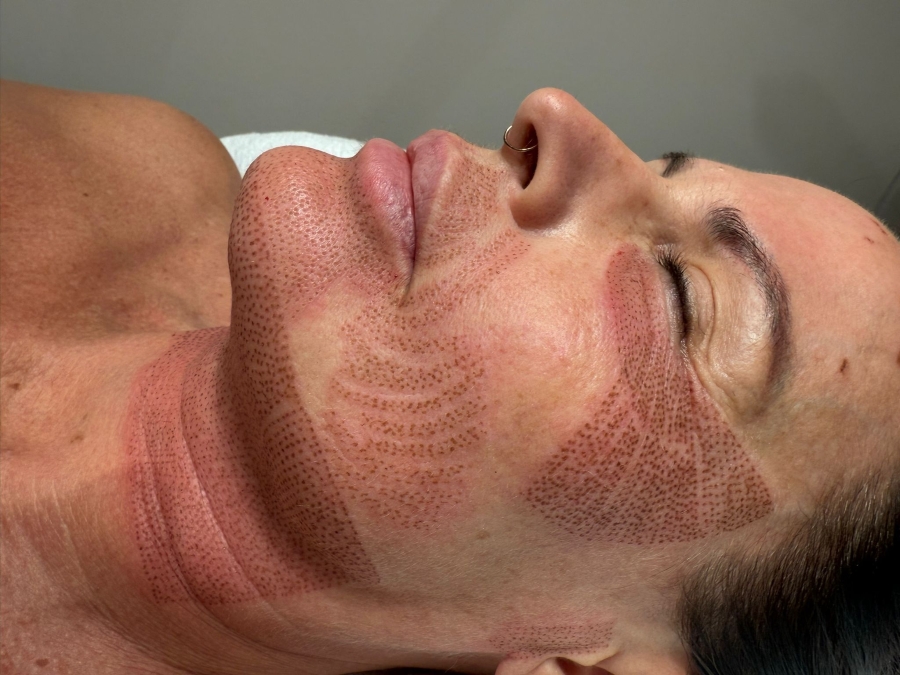
Topical numbing is applied before your appointment, and we send an SMS reminder about an hour beforehand so it goes on at the right time. After treatment, small carbon dots form along the treated lid and lift naturally over days three to seven. Swelling is expected and is usually most noticeable in the first one to three days; around the eyes it can be significant enough that some clients prefer to work from home. Allow seven to ten days of social downtime, follow your aftercare closely, and protect the healing skin from sun.
Results and realistic timelines
Once the surface has healed, the tightening continues to build as new collagen matures, with the best results usually visible from weeks six to twelve. Suitable clients may notice a more open, rested look through the eyes and make-up that sits properly again. Depending on the degree of laxity, one to two sessions may be recommended, spaced after full healing. Results may last two to four years depending on your skin, sun habits and the natural ageing process. Results vary, and we will always give you a realistic picture at consultation.
Plasma fibroblast upper eyelids FAQs
In trained hands, yes. Plasma fibroblast upper eyelids treatment is applied dot by dot on the surface of the lid skin, with no cutting and no damage to the eye itself. At North Skin it is only performed after a thorough consultation, by practitioners certified in PlasmaPen and Fusion8 protocols.
Swelling around the eyes is expected and usually most noticeable in the first one to three days, occasionally reaching the under-eye area. It settles as the carbon dots lift over days three to seven. Most clients allow seven to ten days of social downtime for the eye area.
Many clients see visible improvement from a single session, while more established laxity may benefit from a second session once the skin has fully healed, usually after eight to twelve weeks. Your practitioner will map this out honestly at consultation. Results vary between clients.
Results may last two to four years depending on your skin, sun exposure and the natural ageing process. The treatment does not stop ageing, but the renewed collagen means the treated lids stay firmer-looking than they otherwise would. Daily sun protection helps preserve the result.
They suit different situations. Plasma fibroblast suits mild to moderate loose skin on the upper lids, with no cutting, stitches or surgical recovery. Blepharoplasty remains the right option for significant excess skin, especially where vision is affected. A consultation will tell you honestly which category your lids fall into.
If your upper lids have started to feel heavy and surgery feels like a bigger step than you want to take, plasma fibroblast is worth an honest conversation. Book a consultation at our private, calming studio in the heart of Mona Vale and we will assess your lids properly and give you a realistic picture of what treatment can achieve.
Related reading: Plasma Fibroblast for Hooded Eyes and Plasma Fibroblast: What It Is, What It Does, and What to Expect.