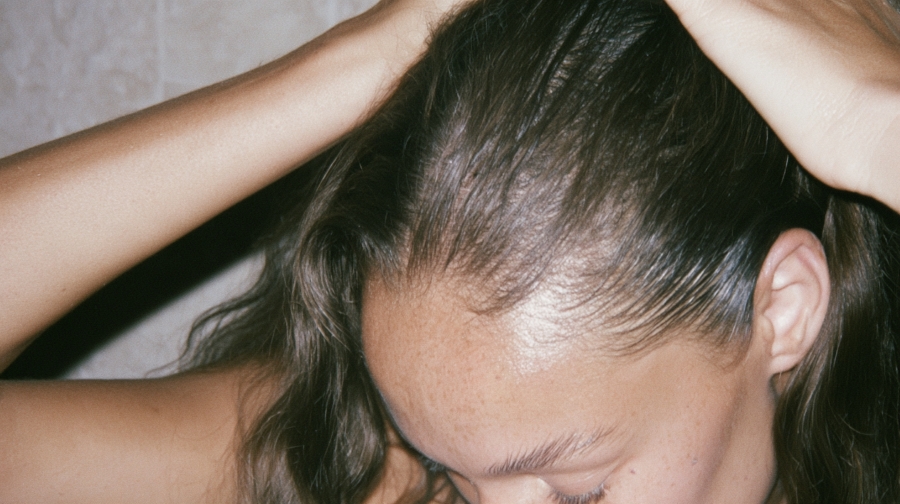
Menopause hair thinning is a gradual loss of hair density, usually across the top and crown of the scalp, that many women notice through perimenopause and the years after it. The part looks wider, the hair feels finer, and the ponytail is not what it was. At North Skin in Mona Vale, Scalp Plasma and naturopathic support are used together to work on the scalp environment and the internal drivers behind it. Hair strands are dead. Follicles are not. We work on the soil, not the plant.
Why menopause hair thinning happens
Hair growth runs in cycles, and hormones help set the length of the growing phase. As oestrogen falls through menopause, that phase tends to shorten, more follicles sit in a resting state at once, and new hairs come through finer than the ones they replace. It is a change in calibre and density rather than sudden loss in patches. A review of the hormonal background of non scarring alopecias notes that it may be the ratio of oestrogens to androgens, rather than either hormone on its own, that drives female pattern hair loss.
Other things stack on top. Iron and protein intake, thyroid function, stress, sleep, scalp inflammation and reduced microcirculation all influence how well a follicle performs.
What may help menopause hair thinning
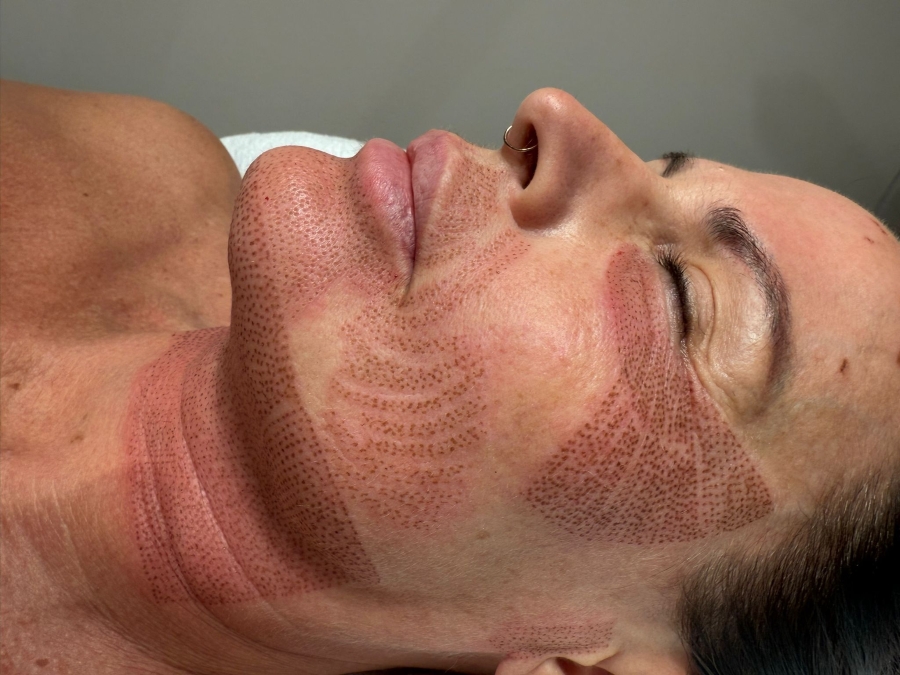
Scalp Plasma combines Cold Ozone Plasma, scalp argon plasma and Plasma Infusion, chosen to suit your scalp. The aim is the environment the hair grows from. Cold Ozone Plasma is a low temperature plasma that supports a calmer, cleaner scalp surface and a more settled inflammatory picture. Plasma Infusion uses plasma assisted microchannels to support circulation and help targeted scalp serums absorb where they are meant to.
None of this makes an existing strand thicker. It supports the follicle and the skin it sits in, which is where any future growth has to come from.
The internal side
Hair is one of the first things the body deprioritises when something internal is off. Our naturopath looks at iron and ferritin, protein intake, thyroid markers, gut health, inflammation and stress load, and works alongside your scalp treatments rather than instead of them. For many women this internal piece is the part that has been missing, and it is where the slower, more durable change tends to come from.
Who it suits and who it does not
Scalp Plasma suits women noticing diffuse thinning, a widening part, reduced density, scalp inflammation, flaking or an itchy scalp. It is supportive care, designed to improve the appearance and condition of the scalp and to encourage follicular activity.
It is not a substitute for medical diagnosis or dermatology care. Sudden shedding, patchy loss, scarring, or hair loss alongside other symptoms should be assessed by your GP or a dermatologist, and some causes need medical management we do not provide. Active infection or broken skin on the scalp means waiting. All treatment begins with a thorough consultation, and results vary.
What to expect and realistic timelines
Sessions are comfortable and there is no social downtime. The scalp may feel warm or look slightly pink for a short time afterwards. You will usually be asked to leave the treatment serums in and delay washing for a day.
Timelines follow the hair cycle, not the treatment schedule, so patience is part of the plan. Most clients are advised on a course of sessions over three to six months, with any visible change in density typically assessed at the three to six month mark. Photographs at the start are genuinely useful, because gradual change is hard to see in the mirror. Suitable clients may notice a calmer scalp well before they notice density.
Menopause hair thinning FAQs
Menopause hair thinning is usually progressive rather than fixed, and how it behaves depends on genetics, hormones and general health. Follicles that have become miniaturised can still be active, which is why scalp health and internal support are worth addressing early rather than waiting. Results vary between individuals.
Scalp Plasma is designed to support the scalp environment, microcirculation and follicular activity. It does not act on the strands you already have, because hair strands are dead tissue. Think of it as improving the soil rather than the plant. Any change in density comes gradually and through the hair cycle.
Most clients are advised on a course over three to six months, with the exact cadence set at consultation based on your scalp, your hair cycle and what is driving the thinning. Scalp treatments work best alongside internal support, so the plan usually includes both. Results vary.
Yes, if the loss is sudden, patchy, rapid, or comes with other symptoms such as fatigue, weight change or scalp pain. Blood work can identify iron, thyroid or hormonal factors worth addressing. Our treatments support the appearance and condition of the scalp and are not a substitute for medical diagnosis.
Most clients do, and we generally recommend it. Scalp Plasma works on the local environment while naturopathy and nutrition address internal drivers such as iron, protein, gut health, inflammation and stress. The two together give a follicle a better chance than either one on its own.
Hair changes through menopause are common, rarely discussed honestly, and often left too long. If you would like a proper look at what is happening and a plan that covers both the scalp and the internal side, book a consultation at our private studio in Mona Vale.
Related reading: Postpartum Hair Loss: What Is Happening to Your Hair and Perimenopause Skin Changes: What Is Happening and What Helps.