A damaged skin barrier is skin whose outermost layer, the stratum corneum, has lost some of its ability to hold moisture in and keep irritants out. It usually shows up as tightness, stinging, flushing, flaking and a sudden intolerance to products that used to feel fine. At North Skin in Mona Vale, we approach barrier-compromised skin with the gentlest tools we have, usually Cold Ozone Plasma and Hyper Plasma, both low-temperature treatments designed to support a calmer, cleaner skin environment while the barrier recovers.
This is not a skin type. It is a state, and it usually improves once the things damaging it stop.
How to tell if you have a damaged skin barrier
The pattern is fairly recognisable once you know what to look for. Skin feels tight soon after cleansing. Products that were unremarkable for years now sting or burn. There is flushing that lingers, patches of rough or flaky texture, and sometimes small bumps or a general dullness. Skin can be oily and dehydrated at once, because it produces more oil while losing water through the surface.
That water loss is the measurable part. Researchers assess barrier integrity using transepidermal water loss, and a compromised barrier reliably shows higher readings alongside lower hydration in the stratum corneum. A qualitative review of barrier-supporting formulations covering this is available on PubMed Central.
What causes a damaged skin barrier
Most often it is accumulated. Over-exfoliation is the common one, particularly stacking acids, retinoids and scrubs in the same routine. Cleansers that strip, water that is too hot, and treatments booked too close together all contribute. So does the environment, and on the Northern Beaches that means sun, salt water, wind and air conditioning working on the skin most days.
Internal factors matter too. Stress, poor sleep, hormonal shifts through perimenopause, gut inflammation and nutritional gaps all affect how well skin repairs itself. Where the pattern keeps returning despite a sensible routine, Nutrition and Naturopathy can be worth exploring alongside topical care.
Some people arrive with an underlying condition rather than simple over-treatment. Eczema, dermatitis, rosacea and psoriasis all involve barrier dysfunction, and Topical Steroid Withdrawal is its own difficult picture. These need medical oversight. Nothing we offer is a substitute for medical diagnosis or dermatology care, and we will say so plainly if that is what your skin needs.
How cold plasma supports barrier recovery
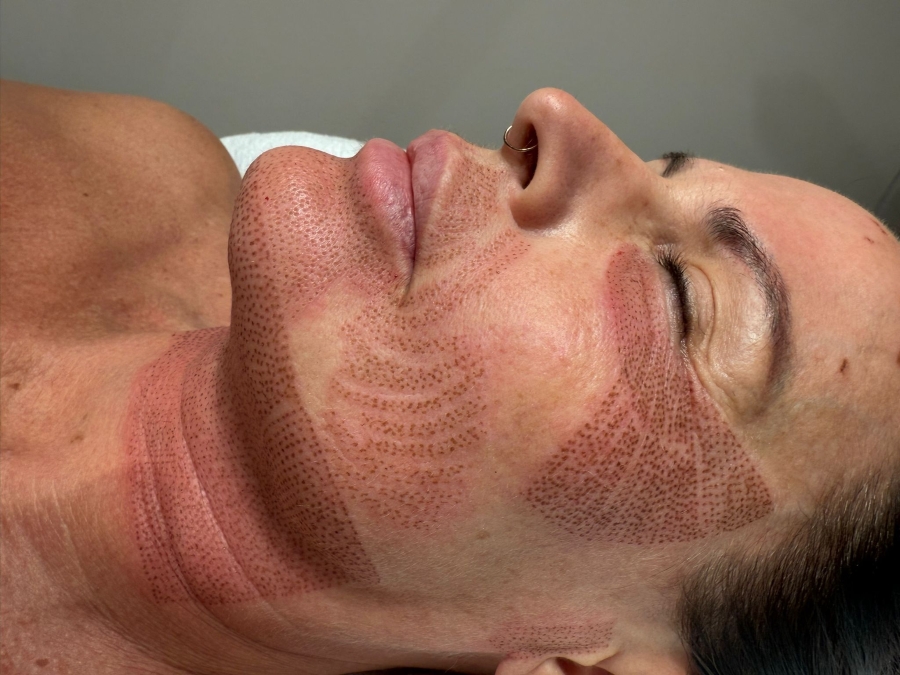
Cold Ozone Plasma is a form of Cold Atmospheric Plasma, generated by ionising air and delivered at skin-tolerable temperatures of roughly thirty to forty degrees. It works by sterilising the skin surface and supporting oxygenation, which encourages a calmer microbial and inflammatory environment. There is no heat injury and no healing phase to manage.
Hyper Plasma sits in the same category at a higher energy. It is more corrective, supporting regeneration and increasing skin permeability, which is why it pairs well with serum infusion once the skin can tolerate it. Both are designed to support the appearance and recovery of the skin rather than to treat a condition.
We usually start conservatively, often with Cold Ozone Plasma alone, and build only if the skin responds well. Barrier-compromised skin does not need more input. It needs less interference and better support.
Who this suits, and who it does not
Calm plasma suits reactive, sensitised, acne-prone, rosacea-prone, eczema-prone, psoriasis-prone and dermatitis-affected skin, and it is often the right holding treatment while a barrier settles.
It is not the right choice if your concern is laxity or texture. Those need corrective treatments, and starting them on a compromised barrier tends to backfire. We will usually ask you to spend several weeks calming the skin before considering anything stronger. Every plan starts with a thorough consultation, and results vary between clients.
What to expect and realistic timelines
Sessions are quiet and comfortable. There is no numbing, no carbon dots and no social downtime, so you can return to normal straight afterwards.
Meaningful barrier recovery is slower than that. Most clients notice a real difference over four to eight weeks, usually with a short series of sessions alongside a stripped-back routine at home. That home routine matters as much as anything we do in clinic. Gentle cleanser, a barrier-supportive moisturiser, daily sun protection, and nothing else until the skin stops reacting. Progressive improvement is what to expect, and results vary.
Damaged skin barrier FAQs
With the irritants removed and a gentle routine in place, most people notice improvement within four to eight weeks. Mild cases can settle faster. Where an underlying condition such as eczema or dermatitis is involved, recovery is slower and needs medical oversight. Supportive treatments may help the process along, but the barrier repairs on its own timeline.
Tightness after cleansing, stinging from products you previously tolerated, lingering flushing, rough or flaky patches, and skin that feels oily and dehydrated at the same time. Many people also notice their skin looks dull and reacts to weather changes more than it used to. The pattern usually builds gradually rather than overnight.
Not all of it, but strip it right back. Pause acids, retinoids, scrubs and anything that tingles. Keep a gentle cleanser, a simple barrier-supportive moisturiser and daily sun protection. Reintroduce actives one at a time, weeks apart, once the skin stops reacting. Most people recover well with less rather than more.
Cold Ozone Plasma is non-thermal and delivered at skin-tolerable temperatures, which is why it suits reactive and sensitised skin. There is no heat injury and no downtime. Suitability is still assessed individually at consultation, particularly where there is an active or diagnosed skin condition, and it does not replace medical care.
No. Cold plasma is not a cure and should not be positioned as one. It may support the appearance and recovery of the skin and help create a calmer surface environment, which some clients find useful alongside their medical treatment. Eczema, dermatitis and psoriasis need diagnosis and management from a doctor or dermatologist.
If your skin has been reacting to everything lately and you would rather work out why than keep guessing, a consultation is a good place to begin. Our private studio in the heart of Mona Vale is a calm space to talk through what your skin actually needs right now, without pressure to book anything. Get in touch when you are ready.
Related reading: Cold Plasma Therapy for Eczema and Topical Steroid Withdrawal and What is Cold Atmospheric Plasma (CAP)?