Skin treatments are no longer a binary choice. More women than ever want options that work with their own skin and tissue rather than adding volume to it. Plasma fibroblast vs injectables is a conversation we have in the clinic most weeks, often with clients who feel unsure where to start and want a clear, honest comparison rather than a sales pitch. The two treatments are not the same, and they are not in competition. They do different things, sit at different points of the rejuvenation conversation, and suit different concerns. This post walks through both so you can make an informed decision.
What each treatment actually is
Plasma Fibroblast is a non-surgical skin tightening treatment that uses targeted plasma energy to create a controlled reaction on the skin surface. That reaction activates the body’s natural wound-healing response and stimulates fibroblast activity, which supports collagen and elastin renewal. Over time, the skin tends to feel firmer and look more refined.
Cosmetic injectables, broadly speaking, sit in two categories. The first is dermal filler, which uses substances such as hyaluronic acid to add volume, support and structure in specific areas. The second is anti-wrinkle treatment, which softens the action of muscles that contribute to expression lines. At North Skin, Cosmetic Injectables are performed by our cosmetic nurse and always positioned as subtle enhancement and refinement, never a heavy or overdone look.
What each one works on
This is where the plasma fibroblast vs injectables comparison becomes clearer.
Plasma Fibroblast works on the skin itself. It supports tightening, surface refinement and progressive collagen renewal in areas such as the upper eyelids, hooded eyes, neck, lower face, around the mouth and the décolletage. It is particularly suited to skin laxity, crepey texture and fine surface lines that come from loss of skin quality.
Injectables work on different layers. Filler addresses volume change and structural support. Anti-wrinkle treatment addresses lines created by movement, particularly in the forehead and around the eyes. They do not directly tighten or remodel the skin layer.
So while both can support a fresher, more refined look, they are doing very different jobs underneath.
Who plasma fibroblast may suit
Plasma Fibroblast may suit clients who want non-surgical skin tightening, see laxity as their main concern, prefer a progressive treatment over an immediate change, and are comfortable with social downtime of around seven to ten days. It is particularly popular with women in their 40s and 50s who notice softening across the upper face or lower face, hooded eyes or crepey texture.
It is not suitable when the concern is submental fat rather than skin laxity. Very dark skin tones require a careful consultation due to pigmentation risk. Suspicious pigmented lesions must be assessed by a dermatologist before treatment, and all plans begin with a thorough consultation.
Who injectables may suit
Injectables may suit clients whose concerns are primarily about volume change, structural support or movement-based expression lines, and who want a more immediate visible result with minimal downtime. They can be a strong fit when used subtly and on the right concern.
They are not a tightening treatment. They do not improve skin quality, texture or surface lines that come from loss of collagen. They also do not stimulate the skin’s own regenerative response in the way plasma does.
What to expect from each treatment
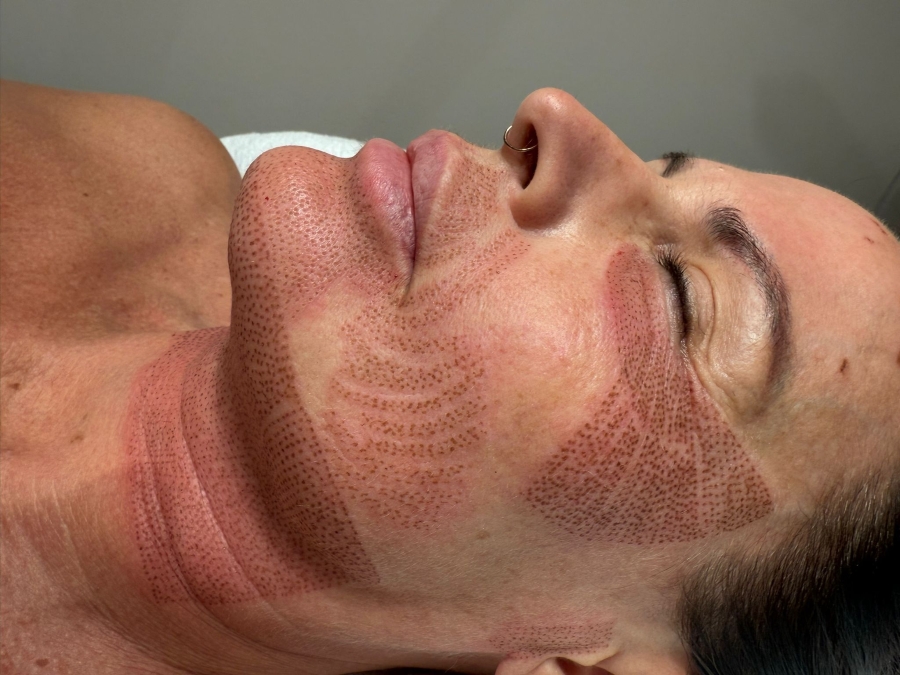
Plasma Fibroblast involves numbing cream beforehand, a precise in-clinic session, and a visible healing process. Small carbon dots appear across the treated area and lift naturally over three to seven days. Swelling is common in the first few days. Plan for seven to ten days of social downtime as a minimum. Results build gradually and are usually most visible from around weeks six to twelve as collagen matures.
Injectables generally have minimal downtime, with some redness or small swelling that settles quickly. Visible change is more immediate. Results are temporary and last for a defined window depending on the product and how your body metabolises it.
Can you combine the two?
Yes, and many clients eventually do. They sit comfortably together as part of a longer-term plan when each is used for what it actually addresses. Plasma may take care of the skin quality and laxity side. Injectables may take care of volume or expression lines where relevant. Some clients also incorporate Cosmetic Acupuncture for a holistic facial rejuvenation approach that supports skin vitality, circulation and facial tension.
The non-negotiable is honest assessment. A treatment used in the wrong place delivers the wrong result. This is why every plan at North Skin starts with consultation.
What the science says about plasma
Plasma fibroblast works through controlled wound healing and growth factor activation. Non-thermal plasma has been shown in published research to stimulate fibroblast growth factor release and support tissue regeneration, which is the mechanism behind the visible firming clients notice over the weeks following treatment (Haertel et al., Non-thermal atmospheric-pressure plasma in wound healing, PMC). It is not an instant change. It is a progressive change driven by your own skin’s response.
For a closer look at how different plasma modalities compare with each other, our post on Plasma Fibroblast vs Warm Plasma breaks this down in more detail.
FAQs
Which is better, plasma fibroblast or injectables?
Neither is universally better. They address different concerns. The right choice depends on whether your concern is laxity and skin quality, or volume change and movement lines.
Can plasma fibroblast replace filler?
Not directly. Filler adds volume. Plasma does not. If a client has significant volume change, plasma alone will not be the answer. Conversely, filler will not tighten loose skin.
Will plasma fibroblast affect my injectables later?
This is a question best answered case by case during consultation, factoring in what you have had, where and when.
Is plasma fibroblast a more natural option?
Many clients perceive it that way, because it stimulates the skin’s own collagen rather than introducing a new substance. The results are also progressive, which can feel more aligned with looking like yourself.
Working it out in consultation
Plasma fibroblast vs injectables is rarely a yes or no question. More often, it is a question of which concern matters most to you right now. Both treatments have their place, and both can be part of a thoughtful, paced plan. We sit down with every client at our private studio in Mona Vale on the Northern Beaches and talk through suitability, expectations and aftercare before anything is booked.