Skin tightening downtime is the recovery period after a treatment that deliberately creates a controlled reaction in the skin so the body rebuilds collagen and elastin. For plasma fibroblast, that usually means around seven to ten days of social downtime, with tiny carbon dots on the surface and some swelling in the first few days. At North Skin in Mona Vale, we plan this openly with every client before booking, because knowing what the healing process actually looks like is what makes the result feel worth it. Downtime is not a side effect to be minimised. It is the treatment working.
Why skin tightening downtime happens at all
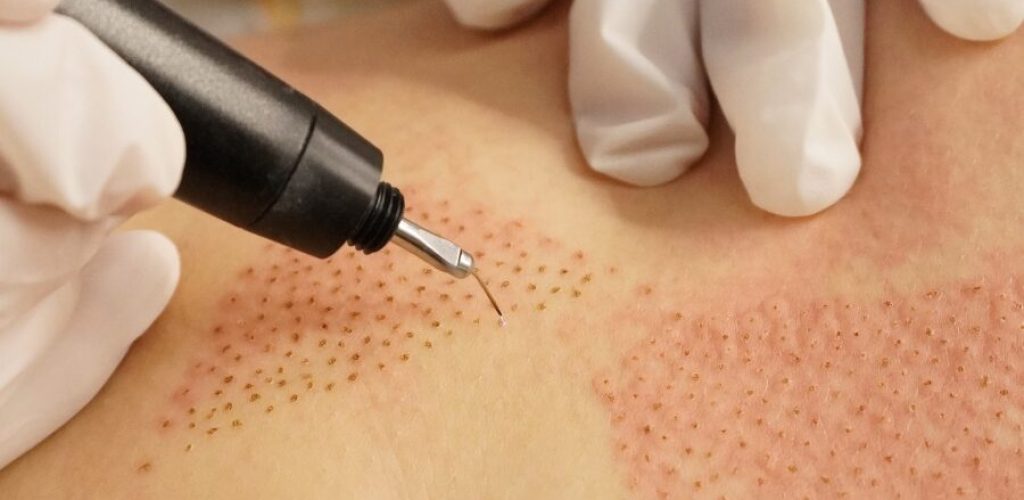
Non surgical tightening works by prompting a healing response. Plasma Fibroblast uses targeted plasma energy to create a precise, controlled reaction on the skin surface. That reaction activates the body’s natural wound-healing pathways and stimulates fibroblast activity, which is what supports collagen and elastin renewal over the following weeks.
Because the skin has been asked to repair, it goes through visible stages while it does. Treatments with no downtime tend to sit in the maintenance category rather than the corrective one. They are a different tool for a different job. Peer-reviewed work on plasma-based skin regeneration describes the same pattern of surface healing followed by progressive dermal remodelling, outlined in Advances in plasma skin regeneration on PubMed.
What the healing process actually looks like
Every client heals a little differently, and the area treated makes a real difference. As a general guide, this is what suitable clients tend to notice.
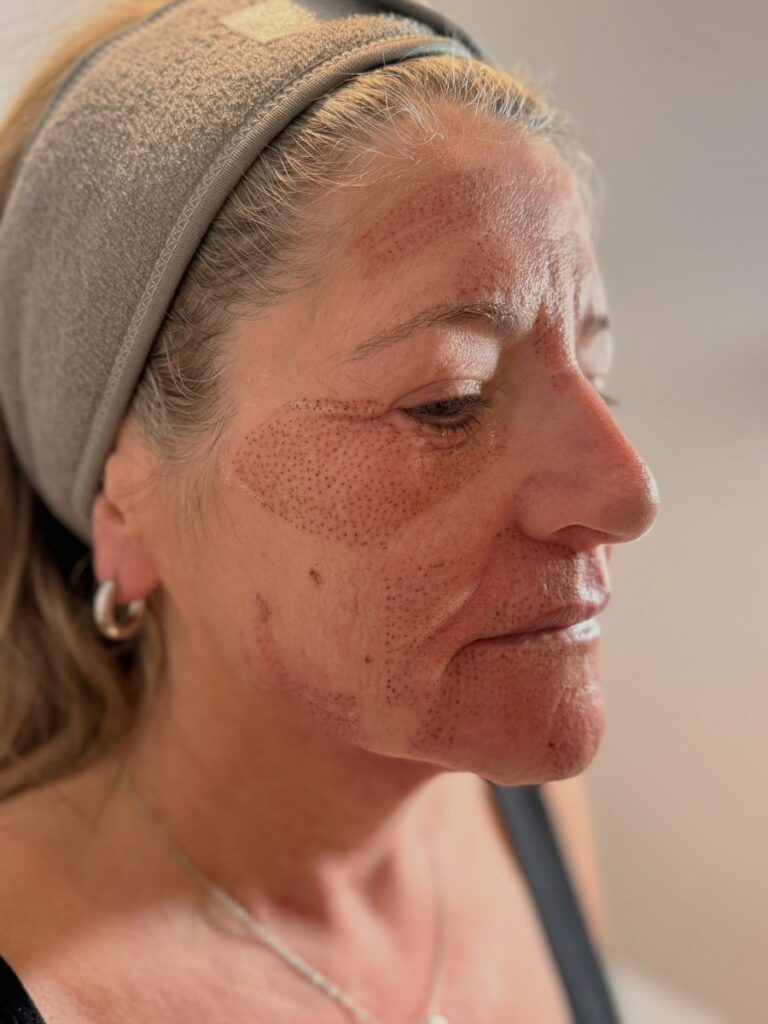
Days one to three. Small carbon dots are visible across the treated area. Swelling is common and usually most obvious around the eyes. The skin can feel tight, warm and a little sunburnt.
Days three to seven. Swelling eases. The carbon dots darken and begin to lift on their own, with pink new skin appearing underneath. Patience matters most here, because picking the dots early is the main cause of avoidable marking.
Days seven to ten. Most dots have lifted. Skin often looks pink, slightly dry and tender. Mineral makeup is usually fine from this point and most clients feel comfortable back at work.
Weeks two to six. Pinkness fades, skin looks smoother and calmer, and early tightening becomes visible while the fuller change is still building.
Who this suits, and who it does not
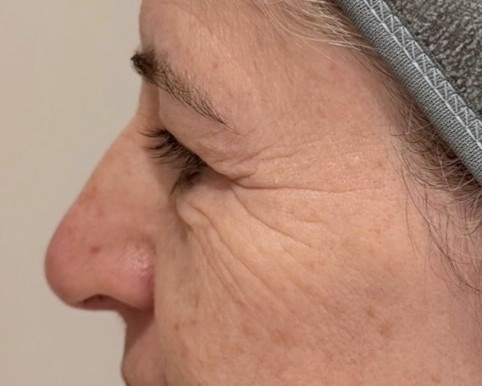
Plasma fibroblast is designed for skin laxity. It targets loose, crepey or lax skin on the upper eyelids, neck, jowls, lower face, décolletage and hands. It is not a volume treatment, and it is not suitable for submental fullness where the concern is fat rather than loose skin. Very dark skin tones need careful assessment beforehand because of the risk of pigmentation change, and we do not treat suspicious, changing or irregular pigmented lesions unless a dermatologist or skin doctor has assessed them first.
If your main concern is texture or acne scarring rather than laxity, Skin Needling may be a better starting point with far shorter recovery. If your skin is reactive or inflamed, Cold Ozone Plasma is a calmer option without a healing phase. Every treatment plan begins with a thorough consultation, and results vary.
How to prepare so recovery is easier
Choose your week deliberately. Book at least two clear weeks before a wedding, holiday or anything photographed. You may be asked to apply topical numbing before your appointment, and we send an SMS reminder about an hour beforehand so you can apply it roughly forty minutes before arrival. Numbing is not automatically included unless stated on your booking.
Keep the treated area dry, clean and untouched. No swimming, saunas, heavy sweating or active skincare until the dots have lifted on their own. Sun protection is non-negotiable once the skin has healed, and it matters for months rather than days.
Results and realistic timelines
The visible surface heals in roughly a week to ten days. The result you actually booked for takes longer. Collagen matures gradually, so most clients see the strongest visible improvement between weeks six and twelve, and some areas benefit from a second session once that window has passed. Where laxity is the main concern and the client is well suited, results may last two to four years depending on skin type, lifestyle, sun exposure and the natural ageing process. Results vary.
Skin tightening downtime FAQs
For plasma fibroblast, plan on seven to ten days of social downtime. Carbon dots are visible for the first three to seven days and lift naturally after that. Swelling is most noticeable in the first seventy-two hours, especially around the eyes. Most clients feel comfortable in public from around day eight, with some lingering pinkness.
If you work from home or are comfortable being seen mid-healing, yes. Most people can work normally from day one, and there is no medical reason to take time off. The consideration is social rather than physical. Client-facing roles and anything photographed are worth scheduling around, which is why we suggest choosing your week deliberately.
Picking is the single most avoidable cause of marking and prolonged healing. The dots need to release on their own timeline, usually between days three and seven. Lifting them early exposes new skin before it is ready and increases the risk of visible marks or pigmentation change. Leave them completely alone.
Yes, though it is a different result. Skin needling has shorter recovery and suits texture and collagen renewal more than targeted laxity. Cosmetic Acupuncture is a holistic option with essentially no downtime, supporting vitality and facial tension. Neither replaces plasma fibroblast where visible tightening is the goal, and suitability is assessed at consultation.
Early change is often visible from around week three, once pinkness settles. The fuller result builds as collagen matures, typically between weeks six and twelve. Some clients choose a second session after that window for further improvement. Results vary based on skin type, treatment area, healing response and aftercare.
If you are weighing up a tightening treatment and want a straight answer about what recovery would look like for your skin and your calendar, a consultation is the place to start. Our private studio in the heart of Mona Vale is a calm space to talk it through properly, with no pressure and no rushing. Book a consultation when you are ready and we will map out the right timing together.
Related reading: Plasma Fibroblast for Crepey Skin and Skin Needling vs Plasma Fibroblast: What’s the Difference?